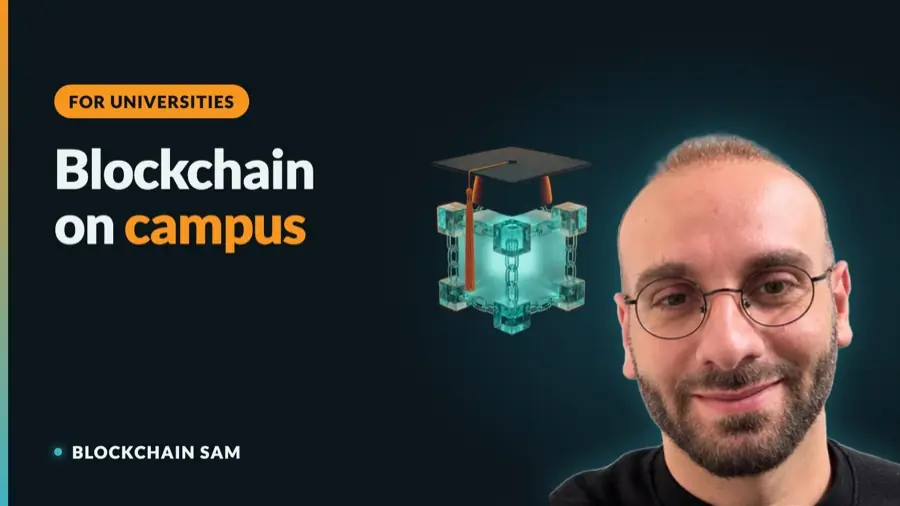
How to bring blockchain education to your university: guest lectures, workshops or a full module
Students ask about crypto, but most faculties don’t have a course for it yet. Three ways to add blockchain education, from a single guest lecture to a credit-bearing module, and how to choose.
- Start with the goal: awareness, practical skills or a credit-bearing course.
- A 2–4 hour workshop is the easiest first step for a faculty or student club.
- Business students need use cases and risks, not code.
- Include scams and security: students are the most targeted group.
- A ready-made module with syllabus and assessment saves months of preparation.
- بلّش بالهدف: توعية، مهارات عملية أو مادة بأرصدة.
- ورشة 2–4 ساعات أسهل خطوة أولى لكلية أو نادي طلاب.
- طلاب البزنس بدهن حالات استعمال ومخاطر، مش كود.
- حط النصب والأمان: الطلاب من أكتر الفئات المستهدفة.
- مادة جاهزة مع منهج وتقييم بتوفّر أشهر تحضير.
01Why universities are adding blockchain now
Students are already using crypto, often without understanding the risks. Employers in finance, consulting, compliance and tech increasingly expect graduates to understand digital assets, stablecoins and regulation. Yet most faculties in the region still have no course for it, and student clubs fill the gap with one-off events.
02Three formats, from light to full
| Format | Length | Best for |
|---|---|---|
| Guest lecture | 60–90 minutes | An introduction inside an existing course, or a club event |
| Workshop | 2–4 hours | Hands-on learning with live demos, for a faculty or student society |
| Webinar series | 4–6 sessions online | Students across campuses or cities |
| Full module | 25 hours over 5 weeks | A credit-bearing elective with assessment |
03What to cover, by audience
- Business and economics students: money and Bitcoin, stablecoins and CBDCs, exchanges and regulation in MENA, DeFi, real use cases versus hype.
- Engineering and computer science: how consensus works, smart contracts, security failures (bridges, oracles), career paths.
- All students: wallets, scams, phishing and how to stay safe. Students are among the most targeted groups for crypto fraud.
04How to plan a session that works
- Set the goal: awareness, practical skills or academic credit.
- Know the level: beginners, curious users, or students who already trade.
- Ask for live demos: setting up a wallet, reading a transaction on a block explorer, spotting a scam.
- Keep it neutral: education, not a sales pitch for any token or platform.
- Plan the follow-up: resources, a recording, or a path to a full module.
05Questions universities ask
Can a blockchain workshop be taught without coding?
Yes. For business and general audiences, the focus is on how it works, real use cases, risks and regulation. Demos use wallets and block explorers, not code.
Is crypto education appropriate for a university in Lebanon?
Many students already use USDT and P2P markets. Teaching how it works and how to stay safe is responsible education, not promotion.
Can the session be in Arabic?
Yes. Sessions can be delivered in Arabic, English or both, which helps mixed audiences.
How do we turn a workshop into a credit-bearing course?
Use a ready-made module with a syllabus, weekly sessions, a project and an assessment model that fits your credit system. See the curriculum outline.
06Who runs this blog
I’m Sam, a crypto educator. I’ve delivered workshops at LAU and AUB and run Binance community sessions in Lebanon, in Arabic and English. See how workshops work.
01ليش الجامعات عم تضيف البلوكشين هلّق
الطلاب أصلًا عم يستعملوا الكريبتو، وغالبًا بلا ما يفهموا المخاطر. وأصحاب العمل بالمال، الاستشارات، الامتثال والتكنولوجيا صاروا يتوقّعوا من الخرّيجين يفهموا الأصول الرقمية، العملات المستقرة والتنظيم. ومع هيك أغلب الكليات بالمنطقة بعد ما عندها مادة إلها، ونوادي الطلاب عم تسدّ الفراغ بفعاليات لمرّة وحدة.
02تلات صيغ، من الخفيف للكامل
| الصيغة | المدّة | مناسبة لـ |
|---|---|---|
| محاضرة ضيف | 60–90 دقيقة | مقدّمة جوّا مادة موجودة، أو فعالية نادي |
| ورشة | 2–4 ساعات | تعلّم عملي مع عروض مباشرة، لكلية أو جمعية طلاب |
| سلسلة ويبينارات | 4–6 جلسات أونلاين | طلاب بكذا حرم أو مدينة |
| مادة كاملة | 25 ساعة على 5 أسابيع | مادة اختيارية بأرصدة مع تقييم |
03شو تغطّي، حسب الجمهور
- طلاب البزنس والاقتصاد: المال والبيتكوين، العملات المستقرة والـ CBDCs، المنصات والتنظيم بالمنطقة، الـ DeFi، حالات الاستعمال الحقيقية مقابل الضجّة.
- الهندسة وعلوم الكمبيوتر: كيف بيشتغل الإجماع، العقود الذكية، الإخفاقات الأمنية (الجسور، الأوراكل)، المسارات المهنية.
- كل الطلاب: المحافظ، النصب، التصيّد وكيف تضل بأمان. الطلاب من أكتر الفئات المستهدفة بنصب الكريبتو.
04كيف تخطّط لجلسة بتزبط
- حدّد الهدف: توعية، مهارات عملية أو أرصدة أكاديمية.
- اعرف المستوى: مبتدئين، مستخدمين فضوليين، أو طلاب أصلًا بيتداولوا.
- اطلب عروض مباشرة: تظبيط محفظة، قراءة معاملة على مستكشف البلوكشين، كشف نصبة.
- خلّيها محايدة: تعليم، مش ترويج لأي توكن أو منصة.
- خطّط للمتابعة: مصادر، تسجيل، أو طريق لمادة كاملة.
05أسئلة بتسألها الجامعات
فيك تعلّم ورشة بلوكشين بلا كود؟
إي. للجمهور العام والبزنس، التركيز على كيف بيشتغل، حالات الاستعمال الحقيقية، المخاطر والتنظيم. العروض بتستعمل محافظ ومستكشفات، مش كود.
تعليم الكريبتو مناسب لجامعة بلبنان؟
كتير طلاب أصلًا بيستعملوا الـ USDT وأسواق الـ P2P. إنك تعلّم كيف بيشتغل وكيف يضلّوا بأمان تعليم مسؤول، مش ترويج.
فيها تكون الجلسة بالعربي؟
إي. الجلسات بتنعطى بالعربي، الإنجليزي أو التنين، وهيدا بيساعد الجمهور المختلط.
كيف منحوّل ورشة لمادة بأرصدة؟
استعمل مادة جاهزة فيها منهج، جلسات أسبوعية، مشروع ونموذج تقييم بيناسب نظام الأرصدة عندكن. شوف مخطّط المنهج.
06مين بيكتب هالمدوّنة
أنا سام، معلّم كريبتو. عطيت ورش بالـ LAU والـ AUB وجلسات مجتمع Binance بلبنان، بالعربي والإنجليزي. شوف كيف بتشتغل الورش.
More from the blog.